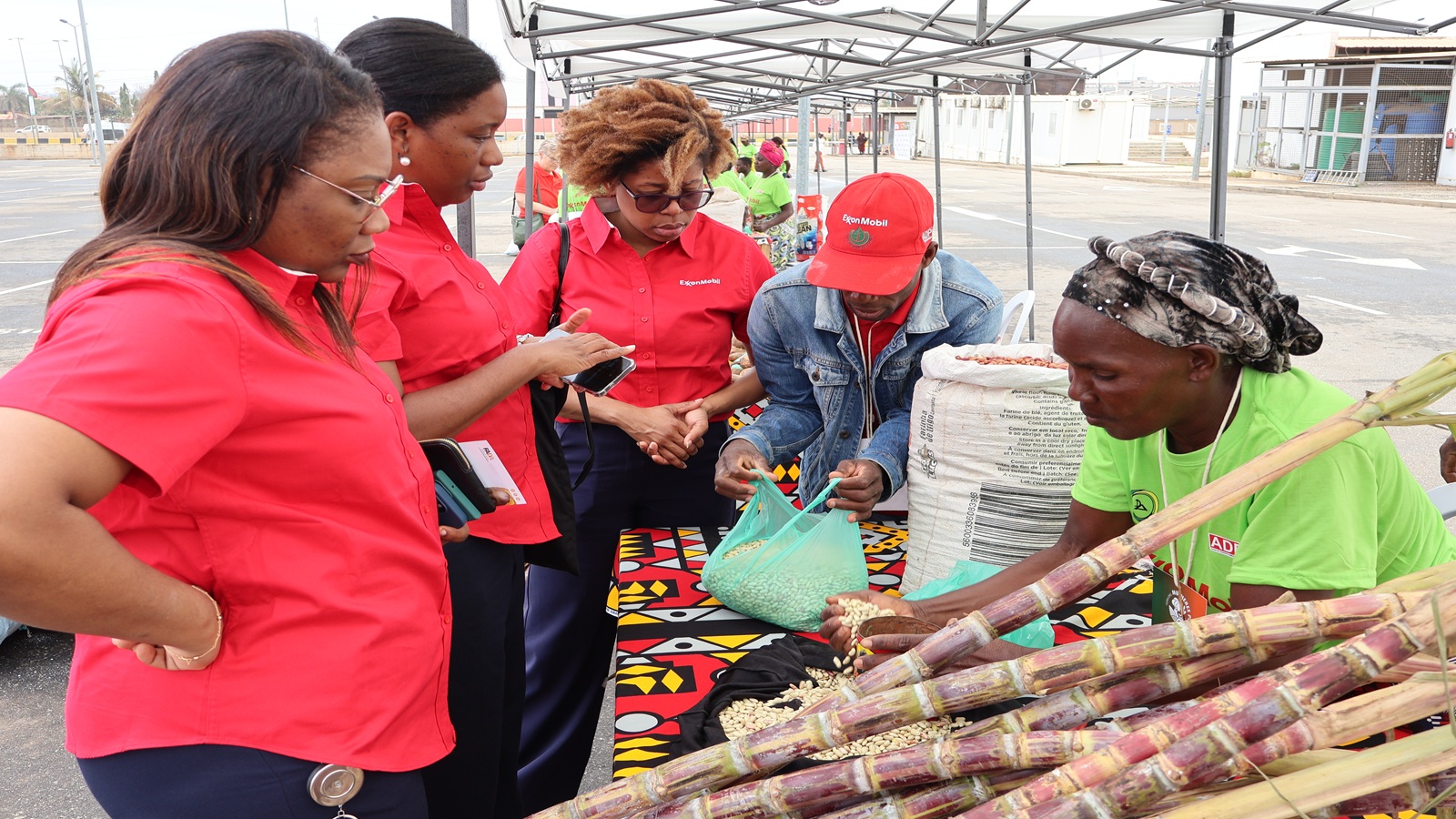



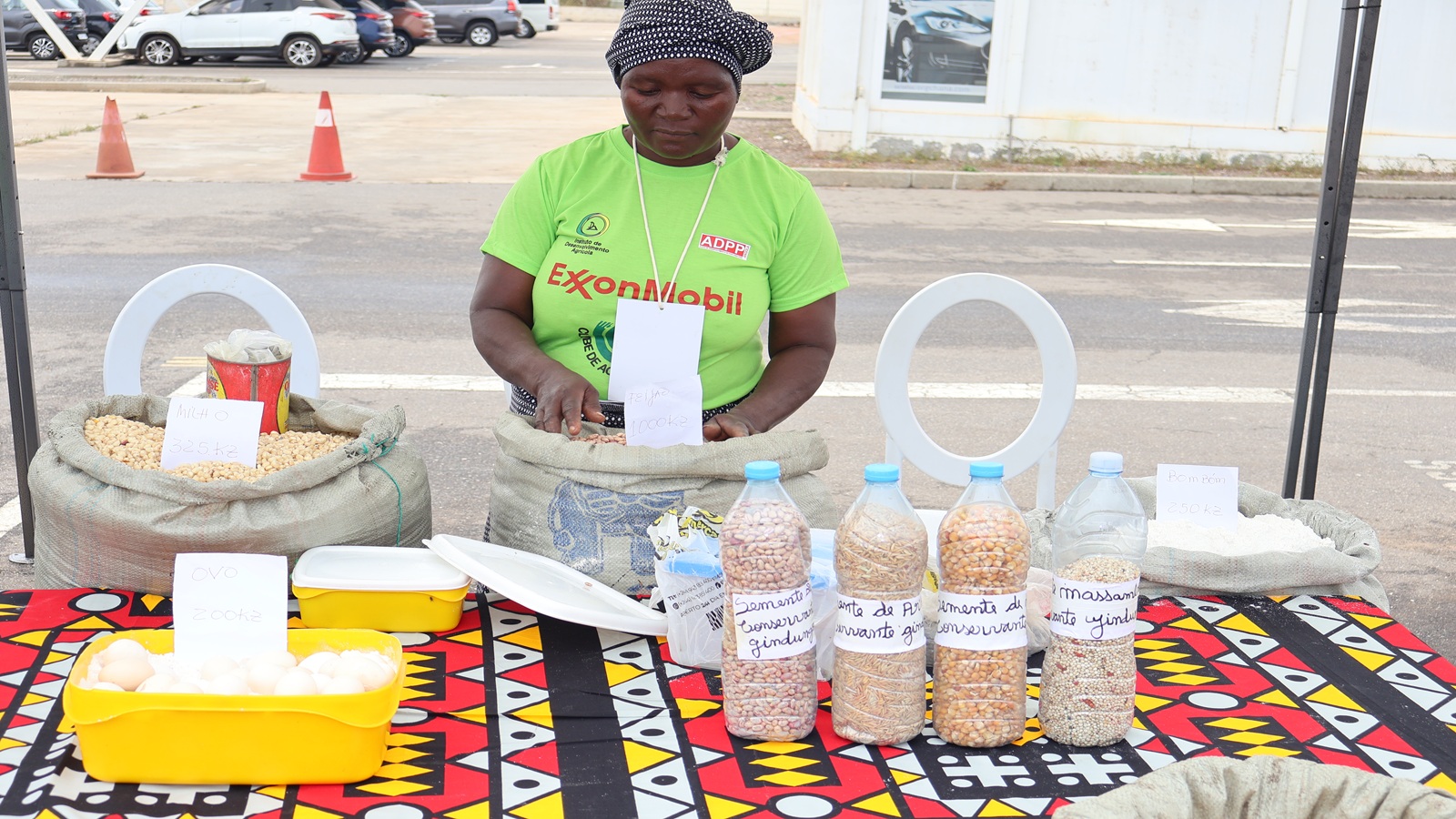
From 10 to 12 September, the Women Producers’ Fair was held at Quintalão das Organizações Chana, on the Via Expressa, Benfica, Luanda, bringing together women involved in the production and marketing of local products.
Organised by ADPP Angola, ADRA, Panafricare, Kissama Foundation and O'mbala, the fair created a meeting space between producers and consumers, giving greater visibility to the work carried out by women in the areas of family farming, artisanal fishing and handicrafts.
Over the three days, various products were presented and sold, including beans, maize, pearl millet, coffee, cassava, bananas, sweet potatoes, Irish potatoes, fruits, fish, eggs, chickens, goats, cassava flour and handicrafts, among other family-produced goods.
In addition to the exhibition and sale of products, the programme included talks and information sessions with representatives of different institutions. The Institute for Agrarian Development (IDA) shared information on family farming, highlighting its importance for food production, family livelihoods and the development of rural communities.
The Agricultural Development Support Fund (FADA) provided participants with information on opportunities to access credit for activities related to the agricultural sector, including financing for production, the acquisition of equipment and marketing.
In turn, the National Institute for Support to Micro, Small and Medium-sized Enterprises (INAPEM) addressed topics related to business formalisation and management, the Certification and Classification of Micro, Small and Medium-sized Enterprises, Meu Gestor and mechanisms for accessing microcredit.
Participants also had the opportunity to process their Identity Cards during the fair, bringing an essential service closer to women engaged in productive and commercial activities.
Through these activities, the fair sought to go beyond the sale of products, creating opportunities to access information, services and financing, while promoting local production and valuing the role of women in the development of their communities.